


Remembering Seamus, a Defender of Human Rights
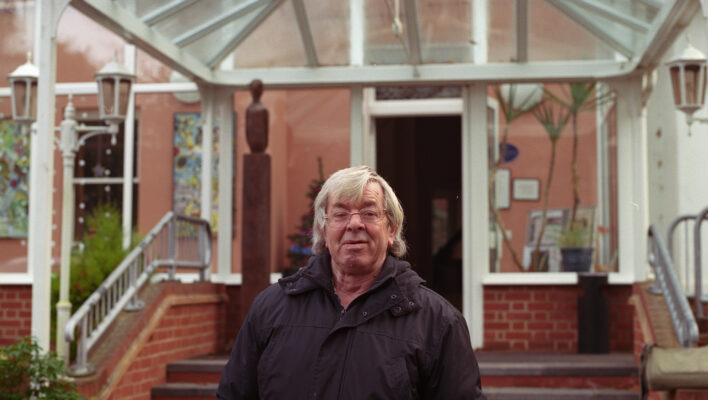
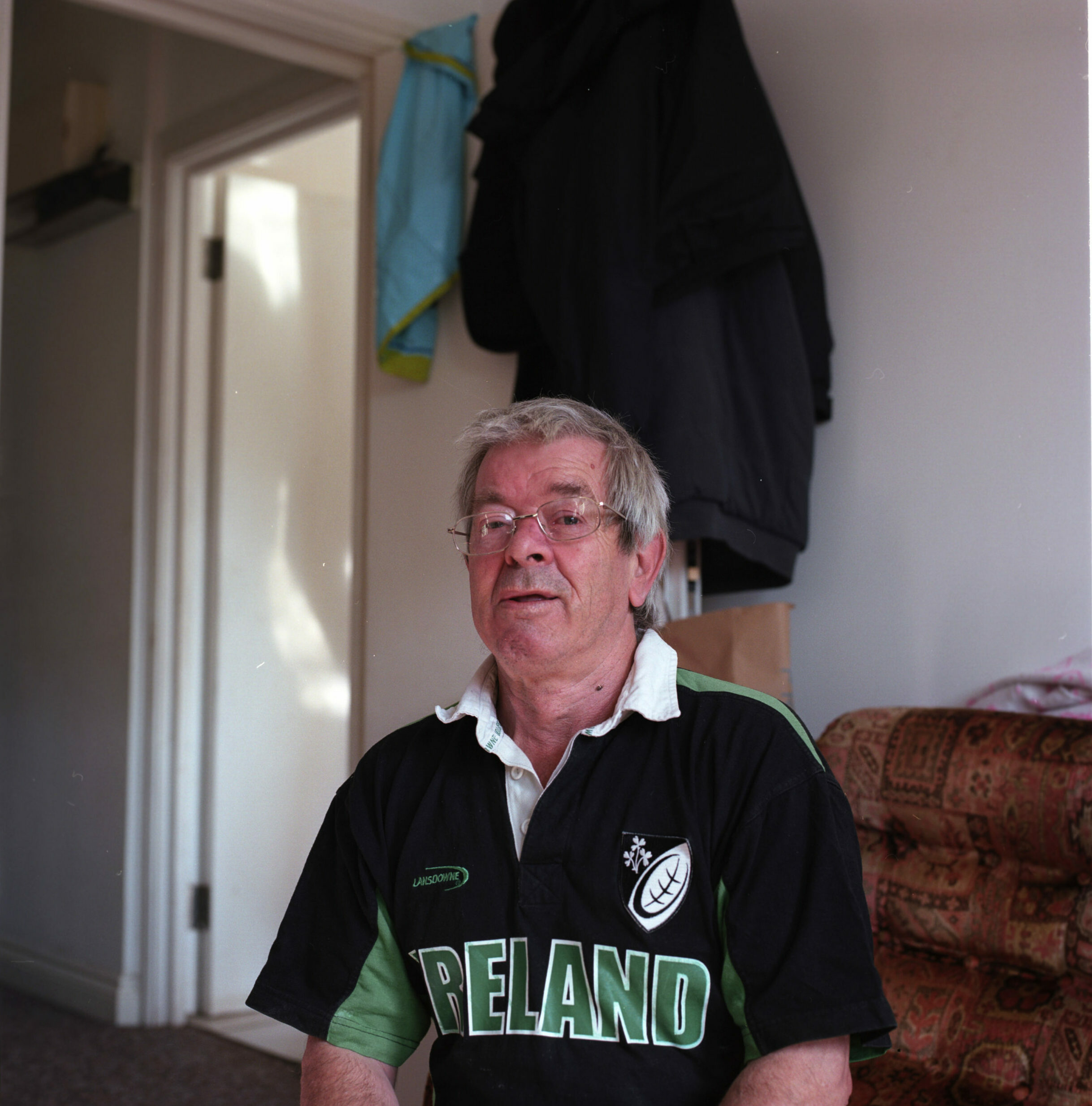
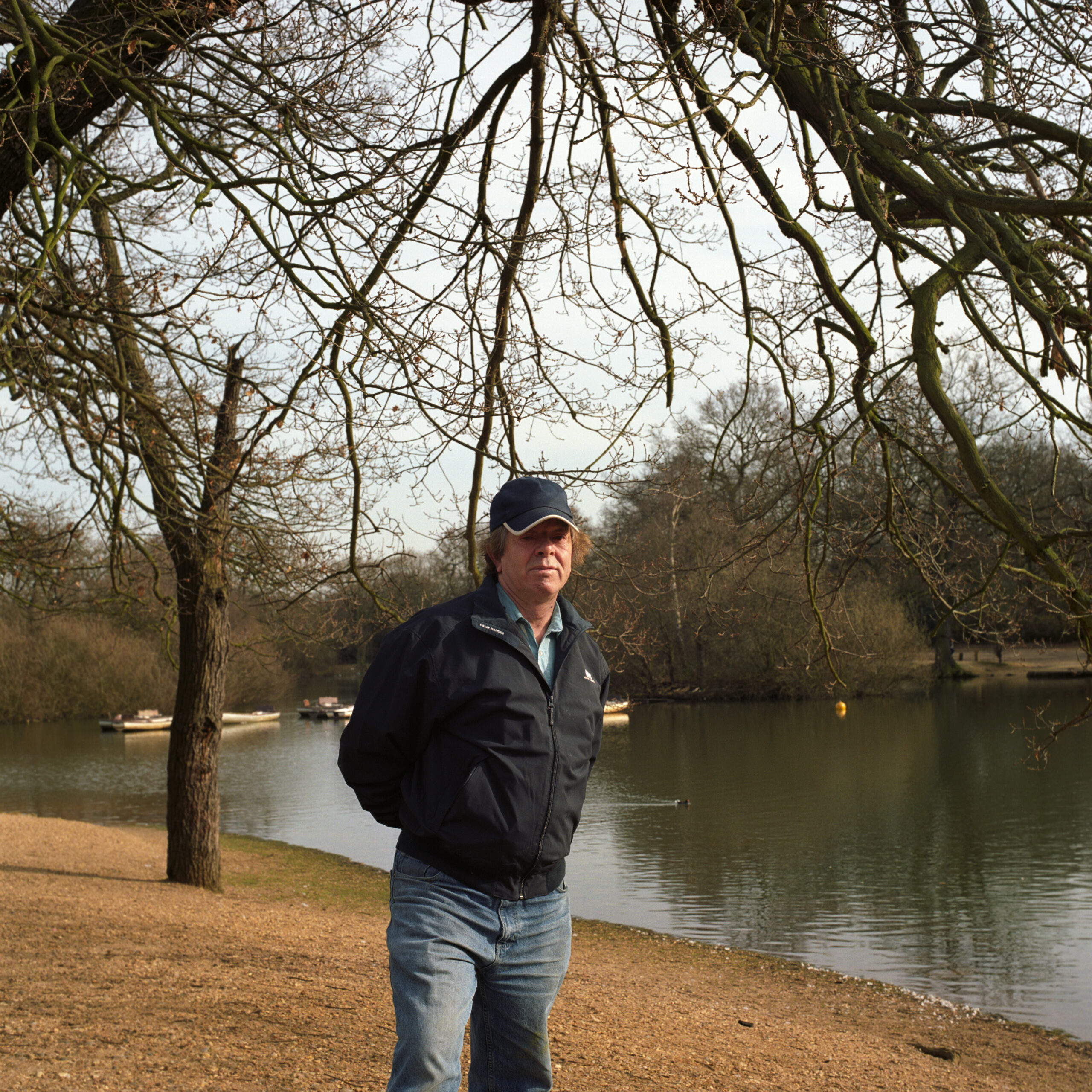
– photos by Eva Sajovic for The Roles We Play
When Irish eyes are smiling,
Sure, ’tis like the morn in Spring.
In the lilt of Irish laughter
You can hear the angels sing.
Seamus Neville, long time human rights activist and key voice for ATD passed away on 5 May 2026. Quoted above is the famous Irish ballad ‘When Irish Eyes Are Smiling’; if you were lucky enough to be in Seamus’s presence, you may have often caught him breaking into song, bursting with pride for his Irish roots. He was a father, a grandfather and a friend who will be well remembered and sorely missed for his sense of justice and strength of character. He was a fighter who would not give up on the possibility of a fairer world.
Over the years, the challenges of life struck Seamus and his family as they went from pillar to post with no security of a home. As Seamus wrote in The Roles We Play, “When you’re in poverty, you’re frightened. You feel like a nobody”. He faced adversity with courage.
The right to family life
After getting involved with ATD Fourth World through Frimhurst Family House, he got to know other families who faced similar challenges. He then turned his own difficult situation into a chance to advocate for others in order to promote the right to family life for those experiencing poverty. He said:
“I work to defend human rights, fight against poverty and help other families through difficult times. I have sat through court proceedings with families fighting for their rights. I supported one family when they were fighting for their kid in the courts. I did it because I’m a friend. I also did it because it was good to have someone else alongside me when I was in that same position. […] Coming together with other people who are experiencing poverty, we gain our strength from each other.”
Speaking to Parliament
He utilised this strength over several decades, participating in countless actions to address the issue of poverty. In 1987, Seamus worked with families across England to provide information for the Wresinski Report. Written by Joseph Wresinski (founder of ATD Fourth World) and officially titled “Chronic Poverty and Lack of Basic Security”, it was published by the French Economic and Social Council.
This report was groundbreaking and had an immediate effect on policy in France. It aimed to highlight the multidimensional exclusion endured by those living in poverty, explaining that poverty is not simply about income but rather a systemic violation of human rights. Most importantly it was the first report of its kind to truly incorporate the voices and experiences of people with a lived experience of poverty. A few years later the publication was launched in the Houses of Parliament here in the UK and Seamus delivered an important public speech.
Stuart and Isabelle Williams, members of ATD’s International Volunteer Corps who knew Seamus for several decades, clearly recall preparing the speech with him: “Seamus rehearsed what he was going to say with Arnold Matthew, a faithful Welsh ally, standing at the other end of a vast room and getting him to project his voice so he would be heard; it was an unforgettable scene.”
The importance of respect
Seamus always dressed up for this kind of occasion. He said,
“When I’m representing ATD Fourth World, I dress with a collar and tie to show people that we might be poor but we can be respected at the same time. That’s the reason I put a suit on. I know there are a lot of people that can’t afford to buy a suit but I find the cheapest suit I can buy, whatever colour.”
Seamus recognised the importance of persistence and the need for working and learning together as a community. He once reflected:
“When volunteers come to work with ATD Fourth World, I tell them that we can learn from them as much as they can learn from us. […] We are training social workers so that children don’t go into care for the wrong reasons and [so they] respect families and treat them with dignity. We know that this is not going to happen overnight but it is a step in the right direction or to put it in another way, a foot in the door.”
He was resilient, humble and devoted to his family. This dedication spread to his care for other families. Addressing Parliament in 1987 he said, “We parents have been heard. This shows that we haven’t been forgotten, that we’re not alone; but we must keep going.”
The United Nations Day to End Poverty
In 2008 a stone commemorating the UN International Day to End Poverty (17th October) was laid in Dublin alongside the statues remembering famines in Ireland. Seamus wrote a letter in which he expressed his joy about this:
“When the Stone is laid, it will be a great day for the Irish people and for yourselves. I am so overjoyed with this news. 17th October plays a big part in my life because I was born in poverty, and I am still struggling with poverty. God bless you all.”
It was 17 October 2017 where he addressed the United Nations in New York stating:
“As families who have been abused by the system, we need to stand up and join our voices to say enough is enough. Coming together gives us the strength to fight for our rights.
“We may be poor, but we are rich in knowledge.”
Hiding pain
In that same speech, Seamus continued to say:
“All we ask is to be respected and to be treated in the same way as other people. We do need to treat one another with respect and dignity. Today in many European, African, Asian, and Latin American countries, in Great Britain, and here in the United States, we, the people living in poverty, conduct training programmes to teach social workers, teachers, and citizens about what we know, what families like ours experience. For me, it means that I put on a front to hide my suffering. I hide my pain when I work with those professionals, and I get my strength from other families struggling as I am. Our goal is to make professional practice and behaviour change, and to ensure that our own knowledge is taken into account.”
He finished his speech by saying, “Fighting for human rights, dignity and justice is a long battle; but we will overcome for the sake of our children.”
Seamus was also a proud participant in Poverty2Solutions, where in 2022, he helped make this video funded by the Joseph Rowntree Foundation.
A sanctuary
Stuart and Isabelle Williams write:
“We always felt that when Seamus met [ATD Fourth World], he met not only a movement but a family, people who shared his life, his views on things, people he could trust and be friends with, people with whom he could fight for a better life for all, not only for his own family but for all the families living in poverty. Frimhurst was a very important place for him and he remembered exactly the date [when he arrived] on the 16th of June 1986. He lived there for a few months and he loved the ‘complaints meetings’ and the fact that [these were chances for] everybody [living at Frimhurst to] express themselves and give ideas to improve everyday life there. For him, it was a place of freedom–even a sanctuary, as he used to say. ”
A hundred thousand welcomes
Sylvie Daudet, who also got to know Seamus in her role as part of ATD’s International Volunteer Corps, says:
“As a father, he was very proud to have helped his wife Wendy when she gave birth to Daniel. He was very proud of all his children [Mary Ellen, Anne-Marie and Daniel], and of Chloé, his dear granddaughter. He was very happy to have been able to spend this last Christmas with Chloé at Anne-Marie’s. Seamus was a very kind man, respectful of others. He was proud to be Irish and when he knew I was going to Ireland, he started to teach me Irish and one of his favourite sentences: ‘Céad míle fáilte: a hundred thousand welcomes’. I was happy in 2024 to have been able to come to London and read to him what I have written in tribute to Wendy and the impact she had on my life. He was very encouraging.”
Seamus will be greatly missed by all those who had the chance to know him and the privilege of being considered his friends, and most of all by his beloved family, for whom he fought so hard. He will stay forever in our hearts.
Seamus, we will never forget you, nor your songs, your poetry and your joyful nature.
To hear Seamus speak—and sing!—please click on the link below to watch a video made in 2016.