“Craftivism” to stand up for the socio-economic duty
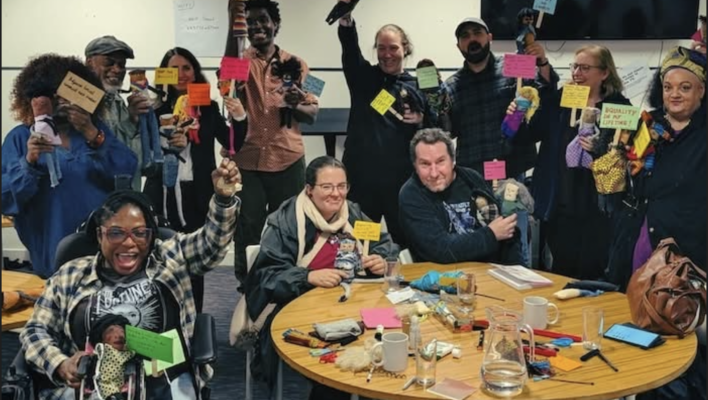
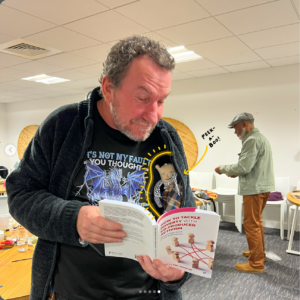
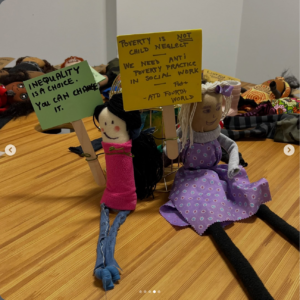
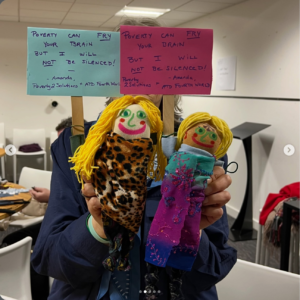
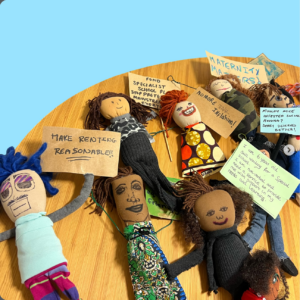
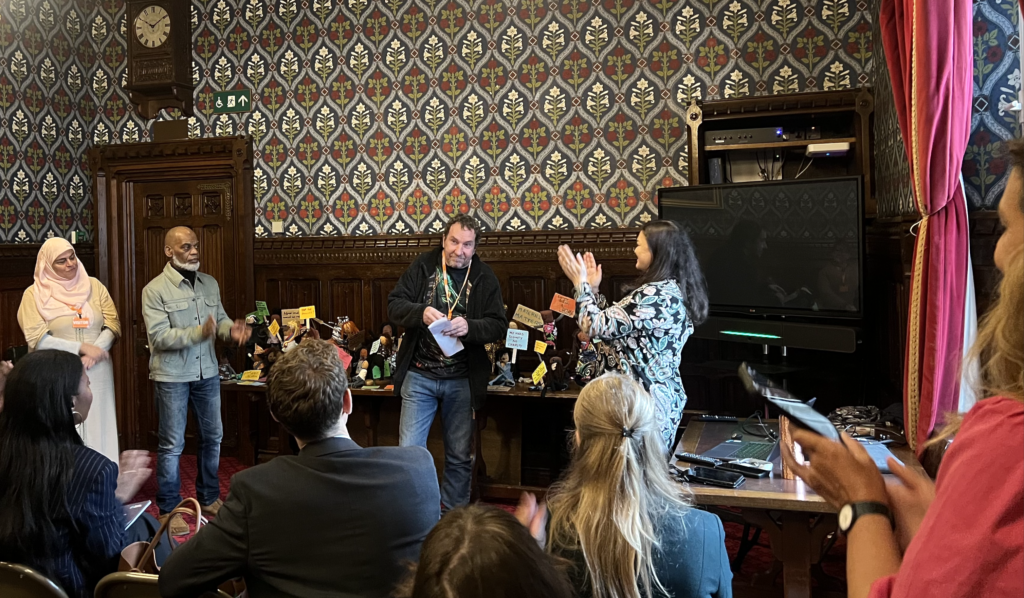
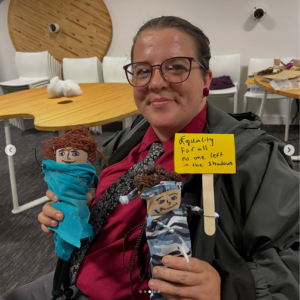
Three ATD Fourth World activists representing Poverty 2 Solutions joined The Equality Trust to urge members of the UK Parliament to activate the #SocioEconomicDuty — Section 1 of the Equality Act 2010. Activists with lived experience of poverty took part in a craft workshop, creating “small but mighty” dolls that they then took to the All-Party Parliamentary Group on Poverty and Inequality.
Sixteen years after the Equality Act 2010 was passed, the socio-economic duty lies dormant. We are still waiting for a start date to ensure that the UK government and local authorities consider the impact of policy options upon people facing poverty, the class ceiling, and socio-economic disadvantage. The #1forEquality campaign coalition has secured positive progress and continues to advocate for meaningful implementation. In this article, Vanessa Boon, senior policy and advocacy leader of the Equality Trust, explains some of the competing narratives about the socio-economic duty.
Genuine participation
Addressing the All-Party Parliamentary Group on Poverty and Inequality, Ruth spoke about how poverty impacts military veterans. Thomas shared the following remarks:
“We are part of Poverty2Solutions, which has been promoting the socio-economic duty since 2018. Last week we launched this report called Collaborating for Change. It’s new research about the practice of making policies with the participation of people in poverty. We spent a year looking across the country for examples at national, local and regional levels. We found a lot of enthusiasm for participation—but unfortunately the evidence shows that it doesn’t actually happen very often. It happens occasionally, mainly at the devolved national level, but it tends to be temporary, ad hoc, and the exception, not the norm. The evidence also shows very strong benefits to setting policy agendas with the genuine participation of people in poverty, so we really hope that in Parliament you will do everything possible to make this into the norm.
‘Stop the discrimination of dehumanising and ignorant treatment’
“We are also part of ATD Fourth World which has been working on poverty, social work and the right to family life. We have been gathering evidence about the impact of discrimination by children’s social care against families in poverty. Last year we submitted this evidence to the United Nations when it was reviewing the UK’s responsibilities under the International Covenant on Economic, Social and Cultural Rights. The UN agreed that British children’s social care is overly focused on intervening at crisis point and removing children from their families. At this meeting in Geneva, the UK government agreed and admitted failure. But so far this has not led to any changes at the Department for Education (which oversees children’s social care).
“Children and families in poverty often face dehumanising and ignorant treatment from social care and other professionals. Their families are cruelly and unnecessarily torn apart by those who they are supposed to trust and who have significant power over them. The impact of this can not be overstated; it affects every aspect of life for every member of the family and follows them for generations.
“Our hope is that the Department of Education will begin to think together with the young people and parents with lived experience of poverty in order to stop this discrimination.”